

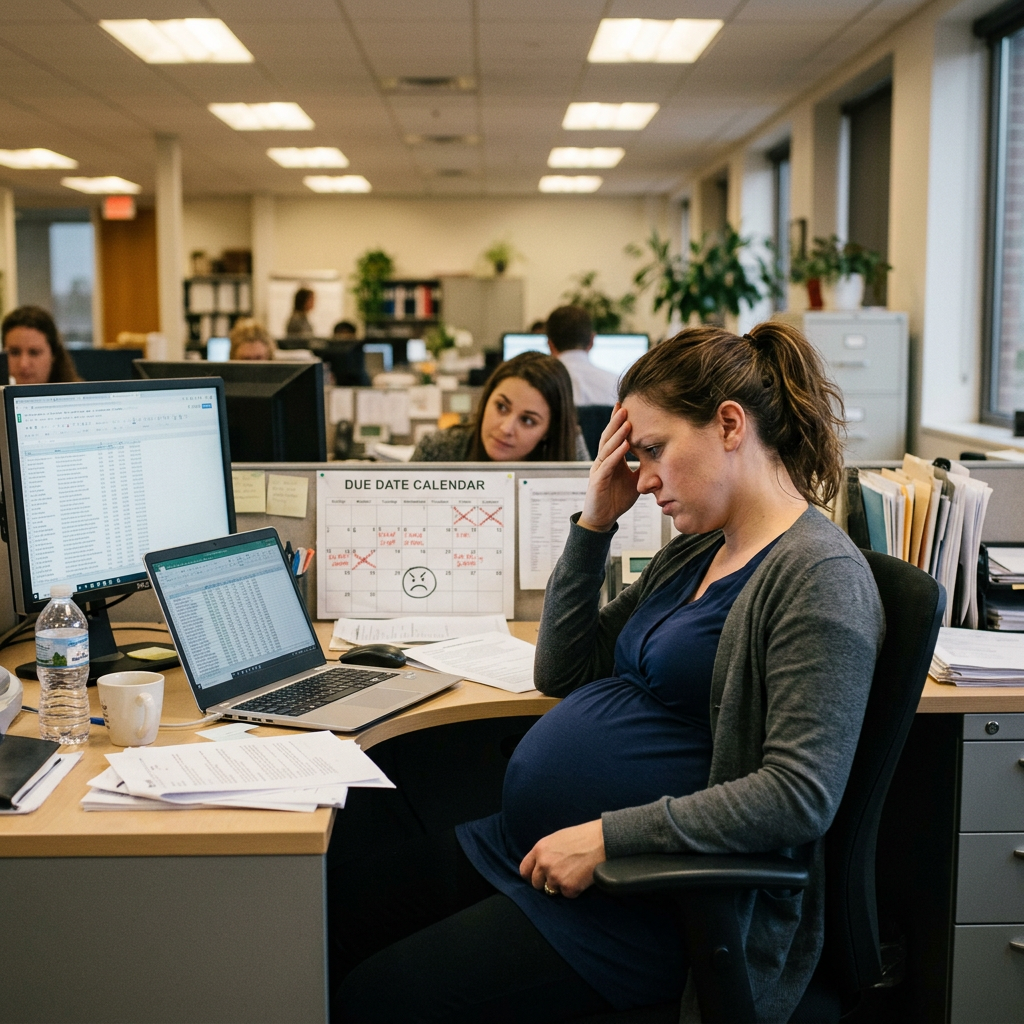

Pregnancy Discrimination Claims in Massachusetts: What Employers Are Required to Provide
By a Massachusetts Business Attorney · Employment Law
An employee just told you she’s pregnant, and you want to handle this correctly. You’re not sure what accommodations you need to provide, what leave you’re required to offer, or what mistakes to avoid. …
Pregnancy discrimination is a serious issue under Massachusetts law, but most problems are avoidable with the right approach.
Let me walk you through your obligations, the accommodations you must consider, the leave rights employees have, and the common mistakes that expose employers to liability.
Pregnancy Discrimination Under M.G.L. c. 151B
M.G.L. c. 151B, § 4 makes it unlawful for an employer to “discharge, refuse to hire, or otherwise discriminate against a person with respect to compensation, terms, conditions, or privileges of employment because of… sex, which includes, but is not limited to, discrimination on the basis of pregnancy, childbirth, or a condition related to pregnancy or childbirth.”
What is clear: you cannot treat a pregnant employee less favorably than other employees, whether in hiring, compensation, promotion, work assignment, or termination.
But here’s something important: pregnancy discrimination is not just about treating pregnant employees “the same” as non-pregnant employees. It requires affirmative accommodation of pregnancy-related conditions. And it’s not just state law. Title VII of the Civil Rights Act (42 U.S.C. § 2000e et seq.) and the Pregnancy Discrimination Act also protect pregnant employees. When federal and state law conflict, you must follow whichever is more protective.
What triggers discrimination liability?
-
Adverse employment action based on pregnancy. Refusing to hire, terminating, demoting, or reducing pay because of pregnancy.
-
Failing to provide reasonable accommodations. Refusing to accommodate pregnancy-related conditions when accommodations are possible.
-
Treating pregnancy differently from other temporary conditions. If you accommodate other medical conditions, you must accommodate pregnancy-related ones.
-
Creating a hostile work environment. Permitting harassment or offensive comments about pregnancy.
-
Retaliation. Taking adverse action because an employee requested accommodation or complained of discrimination.
Reasonable Accommodations for Pregnancy-Related Conditions
Here’s something I see employers get wrong all the time: they assume that if an employee can perform her normal duties, no accommodation is required. Wrong. Massachusetts law requires accommodation for pregnancy-related conditions even if the employee can technically do her job.
What counts as pregnancy-related conditions requiring accommodation?
-
Morning sickness and nausea. May require flexible scheduling, frequent breaks, or leave for medical appointments.
-
Gestational diabetes or hypertension. May require modified diet, additional breaks, or seated positions.
-
Bed rest during pregnancy. Requires unpaid or paid leave depending on circumstances.
-
Mobility restrictions. Lifting restrictions, standing restrictions, or stair limitations.
-
Fatigue. May require flexible schedules, work-from-home arrangements, or modified hours.
-
Frequent urination. Requires access to bathroom breaks without discipline.
-
Psychological conditions. Anxiety or depression related to pregnancy.
What accommodations might be appropriate?
-
Flexible scheduling. Allowing an employee to adjust her hours to manage morning sickness or medical appointments.
-
Work-from-home arrangements. Allowing remote work if the job permits.
-
Modified job duties. Temporarily removing tasks the employee cannot perform (heavy lifting, prolonged standing).
-
Additional breaks. Permitting restroom breaks, meal breaks, or rest breaks without penalty.
-
Temporary reassignment. Transferring to a different position temporarily that better accommodates pregnancy.
-
Leave without penalty. Unpaid leave for medical appointments, recovery, or disability.
-
Parking or other privileges. Allowing close parking, accessible entrances, or other comfort measures.
The standard is whether the accommodation is “reasonable” and whether it creates “undue hardship” for the employer. Undue hardship is a high bar. It means significant difficulty or expense, not mere inconvenience or cost.
Parental Leave and Time Off
Massachusetts provides multiple leave rights for parents. Understanding these is critical to complying with law and treating employees fairly.
Parental Leave Under M.G.L. c. 149, § 105D
If you have 6 or more employees, the Massachusetts Parental Leave Act requires you to provide up to 8 weeks of job-protected leave for the birth of a child or the adoption of a child under 18 (or under 23 if disabled). The MCAD reads this as 8 weeks per child, so twins mean 16 weeks. The leave can be unpaid unless your own policy says otherwise. The leave is:
-
Unpaid. The employee doesn’t get paid during the leave, but her job is protected.
-
Job-protected. The employee has a right to return to the same position or an equivalent position.
-
Applicable to maternity and paternity. Both parents are entitled, regardless of gender.
-
Applicable to adoption. Not just biological parents.
-
Applicable to qualifying events. For employees who have worked at least 3 months.
Paid Family and Medical Leave (PFML)
Massachusetts’ Paid Family and Medical Leave (PFML) law, M.G.L. c. 175M, provides paid leave for bonding with a new child. As of 2026:
-
12 weeks of paid leave for bonding with a newborn, adopted child, or foster child.
-
Funded by employee payroll deductions (and employer contributions in some cases).
-
Replaces up to 80% of lower wages (and 50% of wages above half the state average weekly wage) up to a weekly maximum adjusted each year.
-
Run concurrently with FMLA leave if the employee is eligible for both.
-
Applies to virtually all private Massachusetts employers, regardless of size.
Intersection with FMLA and PFML
Federal Family and Medical Leave Act (FMLA) protects employees at covered employers (50+ employees). FMLA provides up to 12 weeks of unpaid leave for birth, adoption, or care of a family member.
Massachusetts law runs alongside FMLA. Here’s how they interact:
-
PFML paid leave can run concurrently with FMLA unpaid leave. So an employee on FMLA gets paid through PFML.
-
State parental leave (M.G.L. c. 149, § 105D) can run concurrent with FMLA. 8 weeks of state parental leave plus 4 additional weeks of FMLA.
-
FMLA does not waive PFML. Both apply independently.
-
More protective law applies. If state law offers more protection than federal, state law controls.
The practical effect: a birthing parent can often take paid PFML medical leave to recover from childbirth and then up to 12 weeks of paid bonding leave, up to a combined 26 weeks in a benefit year, all of it job-protected. FMLA (if it applies) runs at the same time during the first 12 weeks; it does not cap the PFML entitlement.
Common Employer Mistakes
Forcing an Employee to Take Leave
You cannot require a pregnant employee to take leave or leave before she is ready. She can continue working as long as she is able and wants to. You cannot force her out for her own good or because you’re uncomfortable.
Treating Pregnancy Differently from Other Medical Conditions
If you accommodate a male employee with a back injury (no heavy lifting, modified hours, work-from-home), you must accommodate a pregnant employee with similar restrictions. Inconsistent treatment is evidence of discrimination.
Denying Reasonable Accommodations
You cannot deny accommodation just because it’s inconvenient or costs money. The standard is whether accommodation is “reasonable” and whether refusal creates “undue hardship.” Most accommodations don’t meet undue hardship.
Failing to Communicate Leave Rights
Many employees don’t know about parental leave or PFML. You should provide written information about leave rights, eligibility, and the process for requesting leave. Failure to inform can lead to claims that you denied leave.
Taking Adverse Action After Accommodation Request
If an employee requests accommodation and you then terminate, demote, or discipline her, that’s retaliation. Close timing between the request and adverse action creates an inference of retaliation. You need a legitimate, documented reason for any employment decision affecting a pregnant employee.
The Bottom Line
Pregnancy discrimination cases are common, and they’re avoidable. The key is recognizing that pregnancy is a normal part of working life, that accommodations are often simple and low-cost, and that the law requires affirmative inclusion, not just non-discrimination.
When an employee tells you she’s pregnant, your response should be: “Congratulations. What accommodations do you need?” Then listen, evaluate what’s reasonable, and implement accommodations unless there’s genuine undue hardship.
If you’re unsure whether a requested accommodation is reasonable, consult with an employment attorney before denying it. It’s better to ask the question early than to defend a discrimination lawsuit later.
Call my office at 978-273-8337 or visit gaudetlawoffice.com to discuss your pregnancy accommodation policy and practices. I’ll help you create a framework that complies with law and treats pregnant employees fairly.
For more information on pregnancy discrimination, visit the Massachusetts Commission Against Discrimination (opens in new tab).
ABOUT THIS ARTICLE
This article was prepared by a Massachusetts attorney and is provided solely for general informational and educational purposes directed to members of the general public. It does not constitute legal advice and does not create an attorney-client relationship. The law applicable to any particular situation depends on the specific facts and circumstances of that matter. Readers are encouraged to seek the advice of a licensed Massachusetts attorney before taking any action.